

Sustainability Starts Long Before Your Fabric Choice And Continues Long After Purchase
Sustainability Starts Long Before Your Fabric Choice And Continues Long After Purchase
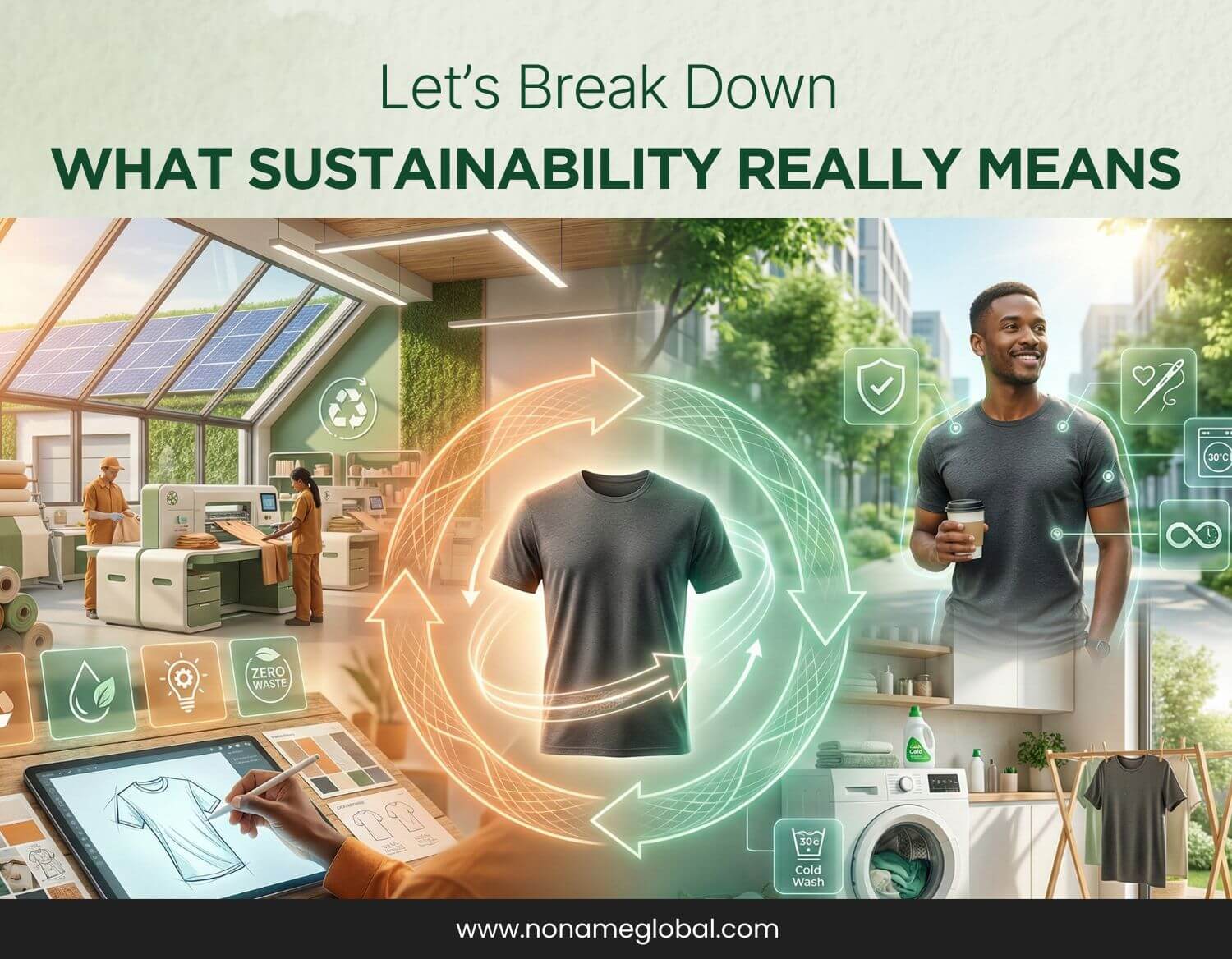
What Sustainability Really Means? Let's Break Down

NoName Clothing Manufacturers
How fashion brands can build true sustainability from design to post-purchase, focusing on durability, responsible manufacturing, and customer education.
Sustainability is not simply about choosing a fabric. It is a system of decisions that starts long before a garment is made and continues long after a customer buys it. For small and midsize fashion brands, sustainability begins at the sketching table, extends through manufacturing choices, and lives on in customer care and long-term garment use.
This guide explains how brands can build true sustainability into every stage of the fashion journey.
1. Sustainable Fashion Begins with Smart Design, Not Trends
Chasing trends is risky. By the time a trend is identified, produced, and launched, it may already be fading. Trend-driven production often results in unsold stock and waste.
Sustainable design focuses on:
timeless silhouettes
seasonless essentials
versatile core products
smaller, intentional collections
Timeless design reduces waste, strengthens brand identity, and supports sustainability far more effectively than fabric choices alone.
2. Longevity Is the Most Sustainable Choice a Brand Can Make
A garment that lasts for fifty wears is more sustainable than one made from recycled materials that fades after five washes. Durability is a deliberate choice.
Brands that prioritize longevity focus on:
strong stitching and reinforced seams
high-quality fabric selection
construction techniques built to last
reliable trims and accessories
Long-lasting garments lower the environmental impact per wear and build customer trust, as quality becomes a marker of sustainable practice.
3. Break the Wash-Care Code: Educate Your Customer
Many customers ignore wash-care labels, and even when they try, the symbols are often confusing. Poor care leads to:
shrinkage
color fading
fabric pilling
frequent washing
early disposal
Brands can make care simple and actionable:
QR codes linking to videos
text instructions like “Wash cold, hang dry”
visual guides for delicate fabrics
social media tips on sustainable garment care
Proper education extends garment life and reduces environmental impact.
4. Use Smart Finishes That Reduce Waste Over Time
Advanced fabric finishes may slightly increase production costs but significantly extend garment life. Useful finishes include:
stain resistance
easy-care coatings
anti-odor treatments
moisture control
wrinkle resistance
These finishes reduce washing frequency, preserve quality, and create a strong brand differentiator, combining design functionality with long-term sustainability.
5. Avoid Overproduction, the Hidden Sustainability Crisis
Overproduction, not disposal, is the largest environmental problem in fashion. Unsold inventory is often dumped, burned, liquidated, or exported as waste.
Brands can reduce overproduction by:
small-batch production
pre-order models
demand forecasting
limiting SKUs
testing designs before mass production
made-to-order drops
Overproduction is a planning issue, not a manufacturing problem.
6. Choose Suppliers Who Prioritize Responsible Processing
Sustainable manufacturing requires brands to demand accountability from their suppliers. Key considerations include:
low-water dyeing methods
closed-loop production systems
certifications like GOTS, OEKO-TEX, or bluesign
energy-efficient processes
reduced chemical usage
Evaluating suppliers by process rather than price ensures responsible production, building trust and long-term brand loyalty.
7. Design for Reparability and Reusability
Luxury brands extend product life through repair programs. Startups can adopt similar strategies:
provide repair guides
supply extra buttons or trims
reinforce stitching
use accessible construction
partner with local repair services
Every repair gives garments a second life, reinforcing sustainability and customer engagement.
8. Adopt Practical Circularity Models (Even Small Ones)
Circular fashion is achievable even for small brands. Initiatives may include:
returning old items for discounts
repair-and-reuse programs
upcycling leftover inventory
recycling partnerships
seasonal garment collection drives
limited-edition remade products
Even small circular actions enhance sustainability and strengthen brand reputation.
9. Use Thoughtful Packaging Without Greenwashing
Sustainable packaging is simple yet impactful. Brands should focus on:
recycled polybags
biodegradable mailers
minimal packaging
printed instructions for disposal
reusable tote-style packaging
Packaging communicates your values before the garment is even worn.
10. Inspire Better Customer Behavior
Sustainability extends beyond production. Brands can educate and inspire customers to:
wash responsibly
repair garments
donate or recycle
avoid impulse buying
choose fewer, higher-quality items
Use social media, inserts, newsletters, and videos to guide customer behavior. Engaged customers become partners in your sustainability journey.
Conclusion: Sustainability Is a Chain of Smart Decisions
Sustainability is not a trend, marketing phrase, or an organic fabric label. It is a continuous chain of intentional decisions at every stage:
✔ before fabric selection
✔ during production
✔ before product launch
✔ after the customer purchase
Brands that embrace this approach build trust, loyalty, and long-term business. Sustainability does not start with fabric. It starts with the brand.
Partner With NoName for Sustainable, Future-Ready Manufacturing
NoName is a leading sustainable clothing manufacturer in India, supporting brands with ethical, scalable, and traceable production.
We help fashion brands:
reduce environmental impact
enhance supply chain transparency
create garments that last
Partner with NoName to produce sustainable, high-quality fashion and co-create a future-ready, responsible wardrobe.
Reach out today to begin your sustainable fashion journey.
Pankaj Agrawal
Celestial Corporation
+ +919650508508
pankaj@celestialfix.com
Visit us on social media:
LinkedIn
Instagram
Facebook
YouTube
Sustainability Starts Long Before Your Fabric Choice
Legal Disclaimer:
EIN Presswire provides this news content "as is" without warranty of any kind. We do not accept any responsibility or liability for the accuracy, content, images, videos, licenses, completeness, legality, or reliability of the information contained in this article. If you have any complaints or copyright issues related to this article, kindly contact the author above.
